Ma.Mu – Mathematics and Music
An innovative methodological development supporting children with dyscalculia
The Ma.Mu (Music for Maths) project is an international strategic partnership funded by the Erasmus+ programme. Its aim is to develop a creative and easy-to-use methodology that supports the development of mathematical and logical skills of children aged 6–15 living with dyscalculia through music-based games.
The project was implemented between 2024 and 2025, coordinated by an Italian partner, with the active participation of four partner countries.
2023-2-IT02-KA210-SCH-000173211
Why is this project needed?
Music – through its structure, rhythm, proportions, and rules – has a strongly mathematical nature. It can therefore provide a natural and engaging medium for approaching mathematics in a playful and experiential way, especially for those learners for whom the traditional school system does not offer accessible pathways.
The aim of Ma.Mu is to provide teachers and facilitators with a practical and accessible toolkit that requires no prior musical training, while offering meaningful support for children with learning difficulties.
Partners
Associazione Bellezza DIeCI
Italy
2th Primary School of Drapetsona
Greece
OOU Petar Pop Arsov
North Macedonia
Aurin and Miraculum Foundation
Hungary


Activities implemented within the project
1. Preparatory one-week online training
Objective: to align the methodological approaches of the international partnership, establish a shared theoretical foundation, and define the professional framework for project planning.
During the training:
- Introductory lectures were delivered on dyscalculia, including the interpretation of its symptoms, as well as its diagnostic and pedagogical challenges.
- Interdisciplinary presentations explored the theoretical connections between music and mathematics, focusing on the conceptual links between rhythm, proportion, sequence, and pattern.
- The structure, timeline, and foundational outline of the digital handbook were jointly developed.
The combination of synchronous and asynchronous activities over the course of the week established a strong professional coherence and a shared conceptual framework for the project.


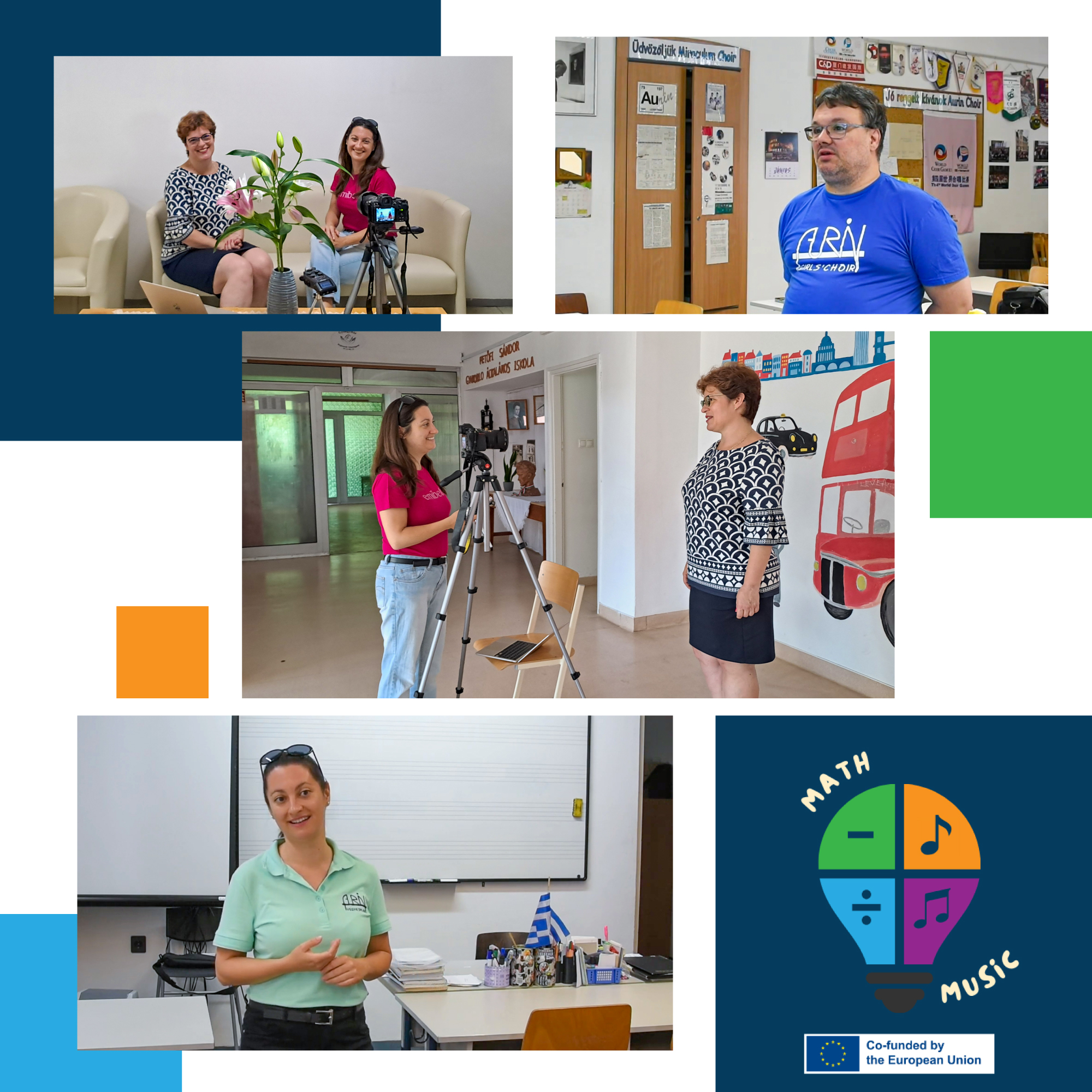
As part of the project, several expert-based videos were produced with the aim of presenting the complex role of music in education, with particular focus on supporting children with learning difficulties.
The videos addressed the following topics:
- the impact of music on brain function, memory, and concentration;
- the transfer effects of music on learning in other subjects – particularly mathematics;
- the inclusion of children with dyscalculia through music;
- practical methodologies demonstrated through musical examples.
These video materials serve not only as complementary illustrations to the handbook but also as important dissemination tools, contributing to awareness-raising and knowledge-sharing.
Throughout 2024, project partners collaborated at local level with teachers, student groups, and youth communities in order to:
- test the effectiveness of music-based logical exercises;
- collect existing, adaptable tasks focusing on rhythm, memory, and pattern recognition;
- gather feedback on the applicability, engagement level, and age-appropriateness of the activities.
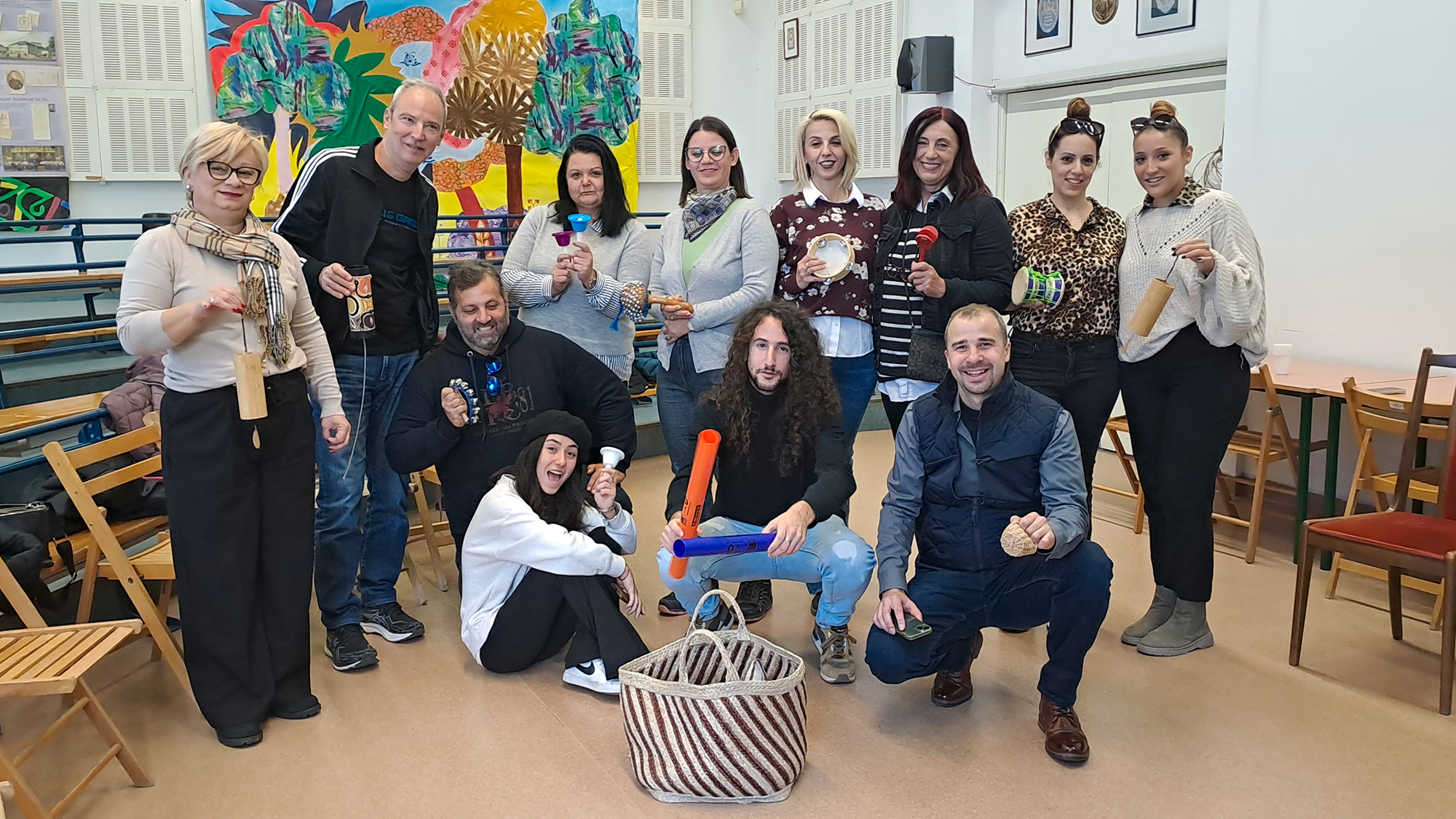
In November 2024, the partnership met in Kecskemét for a two-day workshop to jointly evaluate the results. During this meeting:
- the table of contents and structural framework of the handbook were defined;
- collected games were systematised through group work;
- live demonstrations of activities were carried out with the participation of the Aurin Girls’ Choir;
- feedback sessions, reflective workshops, and documentation recordings took place.
The Ma.Mu digital handbook is an open-access toolkit that:
- provides a theoretical background for the pedagogical understanding of dyscalculia;
- presents inclusive teaching approaches through the tools of music;
- includes 33 structured, game-based musical activities, each described with the following elements:
Objective – Activity – Expected Outcome – Age Recommendation – Variations
During the editorial process, the focus was on practical usability for teachers. Priority was given to solutions that do not require prior musical training or instruments.
The final handbook is available in downloadable format, enriched with visual illustrations and video links.
In the closing phase of the project, partners met in person in Naples, where they:
- evaluated the project results, experiences, and the reception of the handbook;
- discussed the long-term impact of the project, particularly within educational institutions and among educators;
- outlined future directions, including the expansion of the handbook, its adaptation to new target groups, and possibilities for integration into other subject areas.
The meeting confirmed that Ma.Mu is not merely a project, but the beginning of a long-term shift in educational thinking – one that builds on the combined power of music, creativity, and inclusive pedagogy.

Project results
- 33 tested and adaptable game-based activities, each with detailed descriptions, clearly defined objectives, and variation possibilities;
- Methodological background materials on dyscalculia, including its identification, diagnostic approaches, and possibilities for integration within school environments;
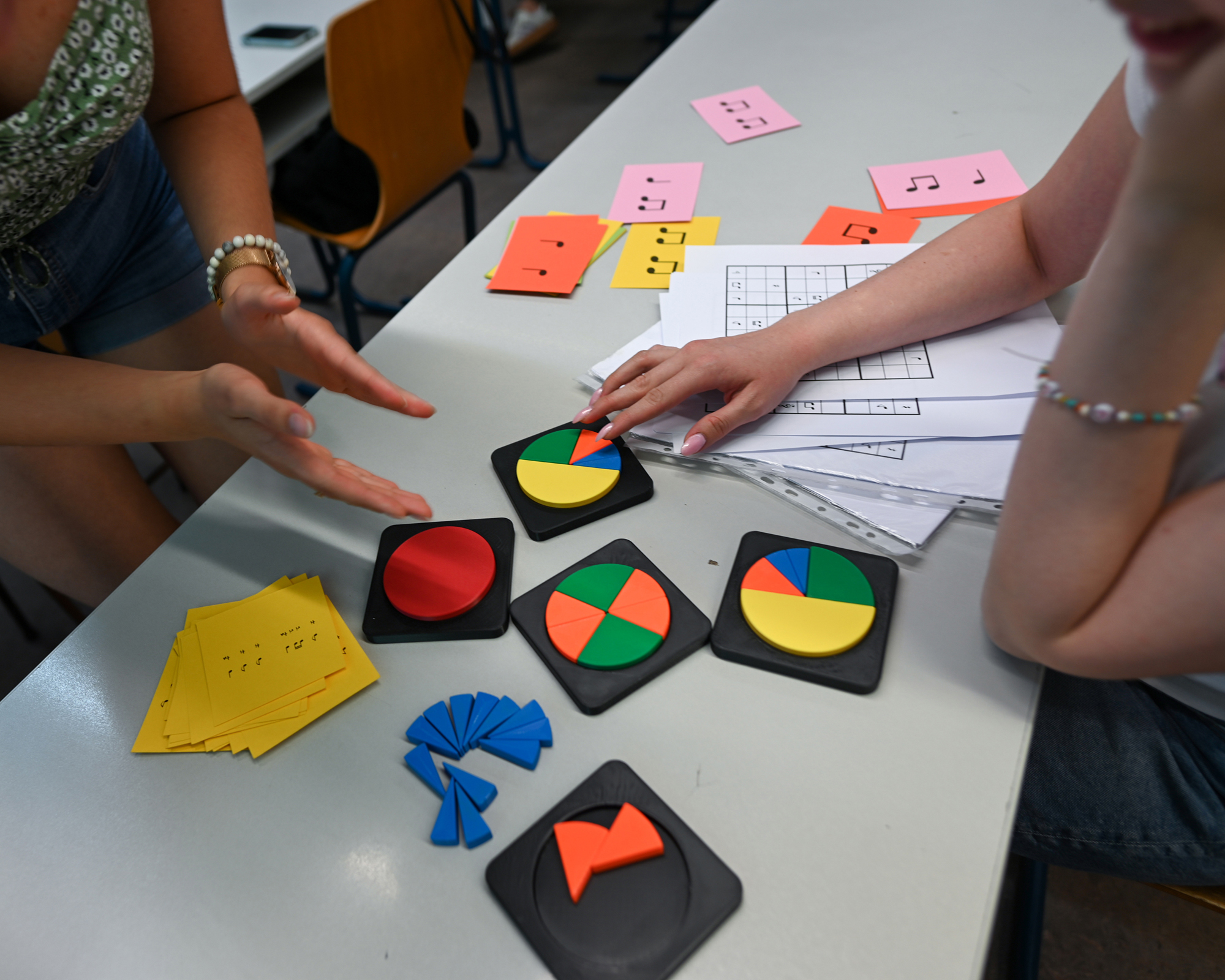
- An innovative gamification approach combining music and movement with mathematical structures (such as meter, rhythm, fractions, and logical patterns);
- A reflective pedagogical framework that also aims to develop metacognition and self-assessment skills.
Key findings:
- Musical structures (rhythm, sequencing, repetition, symmetry) can be easily adapted to mathematical content, making them particularly effective in engaging learners who are less responsive to traditional methods.
- Game-based, music-driven activities reduce learning anxiety, especially among children facing difficulties with numerical processing.
- A practical and accessible toolkit has been created for educators—the activities can be implemented without prior musical training.
- Group-based and creative activities foster social learning, cooperation, and self-expression, thereby strengthening both the sense of community and emotional safety within the classroom.
Looking ahead:
The Ma.Mu project has demonstrated that music-based educational tools are effective not only in addressing learning difficulties but also in enhancing overall learning motivation. The handbook is not an endpoint, but a starting point: it can be expanded, adapted, and extended to new target groups and subject areas. The project highlights a pedagogical perspective in which mathematics is not only about calculation, but also about movement, music, play, and shared experience.
Related news

Music and mathematics: A creative meeting at the end of the school year
As the school year came to a close, the Kodály School in Kecskemét hosted a unique two-day mini-conference and workshop as part of the Ma.Mu Erasmus+ project. Held during the Aurin Girls’ Choir's rehearsal times, the event welcomed university students and educators from Pécs, Budapest, and Szeged...

Global Challenges, Local Responses – Aurin at Classical:NEXT
In May 2025, Edit Pálinkás – representing, among others, the Aurin and Miraculum Foundation – attended the Classical:NEXT conference in Berlin, one of the most significant international events in the world of classical music. While the planned choir meet-up was unfortunately cancelled at the last...

Wrapping Up in Naples – The Closing Chapter of Ma.Mu
This May, we met for the final international meeting of the Ma.Mu (Math and Music) project - and where else could we better close such a creative and warm collaboration than in Naples? The Italian partner, Bellezza Dieci, hosted us in their own local style: morning meetings in cafés, fresh...